
MuseSourcing sources hand tools — socket and screwdriver sets, wrenches, pliers — and automotive tools such as jacks and stands from partner factories in Jiangmen and across Guangdong. Buyers find this page looking for a hand tools manufacturer in China; what we add to that factory is the verification layer described below. In metal tools, quality is decided long before the polish: by whether the factory controls its own forming — forging for wrenches, sockets and pliers, machining for shafts, bits and turned parts — and its heat treatment, or buys finished blanks from whoever is cheapest this quarter. Proving which stages a factory controls, and which it sends outside, is step one of every engagement here. Once a factory passes verification, we coordinate samples, follow production, inspect finished tools and arrange consolidation and shipment.
Manufacturing hub: Jiangmen, Guangdong — the Greater Bay Area’s stainless-steel hardware base. The partner factories we use machine their own parts in-house, and some also forge in-house; which of the remaining stages — forging, heat treatment, plating — each factory also controls is what our verification establishes, factory by factory.
See all the clusters we work in: Products We Source
Key takeaways
- Control of the forming stages is the most reliable sign that a tool factory can repeat its quoted quality at volume: forging and machining under its own roof where the factory does its own forming, and every stage it does not — heat treatment, plating — named as outsourced. A supplier who buys in finished parts cannot control hardness, tolerances or finish — and usually does not know them.
- The numbers that matter in this category are testable: steel grade, hardness after heat treatment, and torque behaviour. We test them on samples from the production run, not on the showroom set.
- Retail sets fail on small things: a missing socket, a cracked case insert, a logo printed off-centre. Set completeness and case fit are inspection items, not assumptions.
- Repeat runs are where tool specifications drift. In our experience, quality slips in roughly 15–25% of repeat orders once the buyer’s checking stops — which is why the checks below run on every batch, not just the first.
What we source in this category
- Hand tool sets: socket sets, screwdriver and bit sets, combination tool kits in blow-mould or metal cases
- Individual tools: wrenches, pliers, hammers, hex keys and measuring tools
- Automotive tools: hydraulic jacks, jack stands, engine hoists and lifting equipment
- Custom (OEM/ODM) programmes: laser-etched or stamped logos, handle and case colours, private-label retail packaging — the same factories run wholesale hand tool lines for importers and retail brands
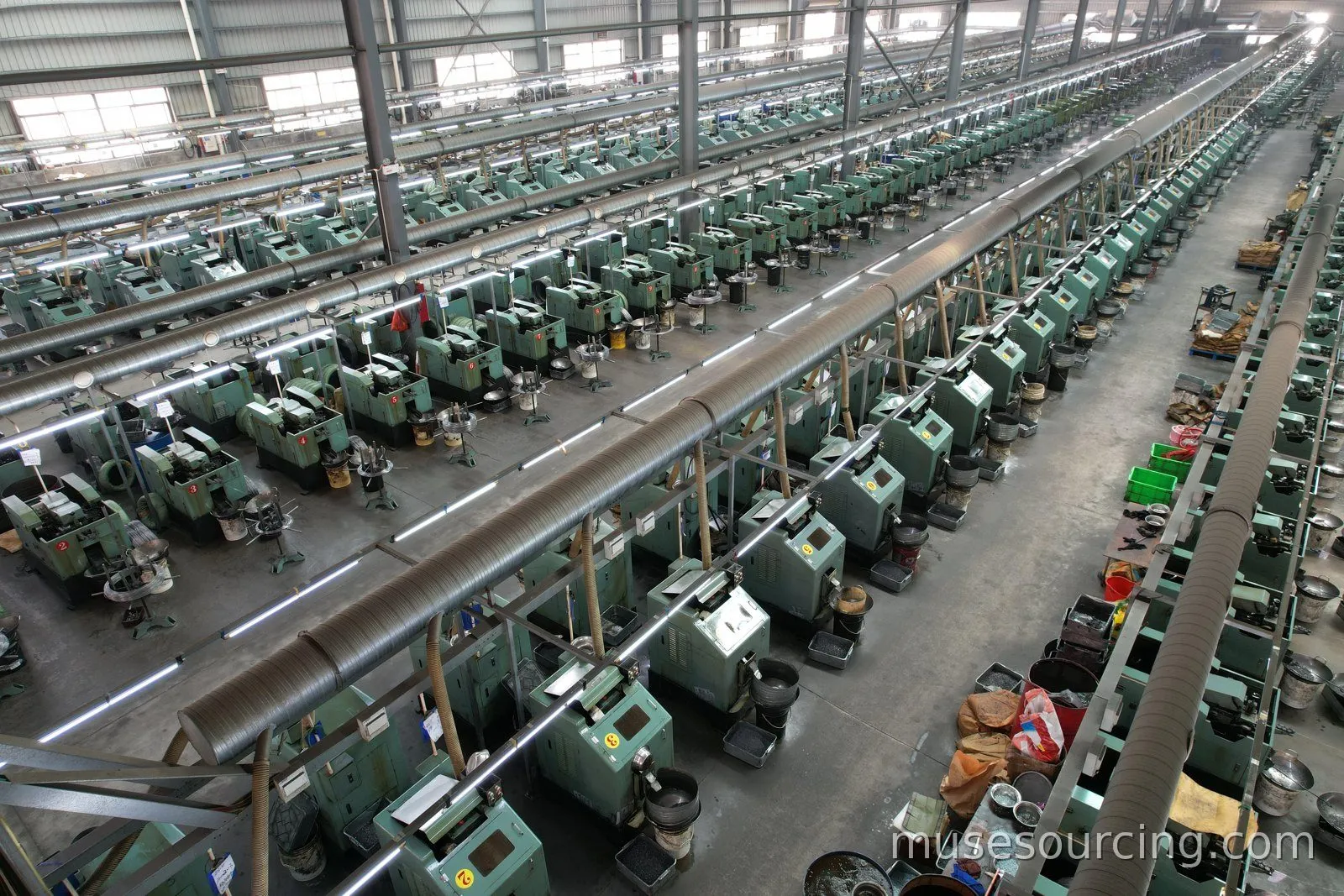
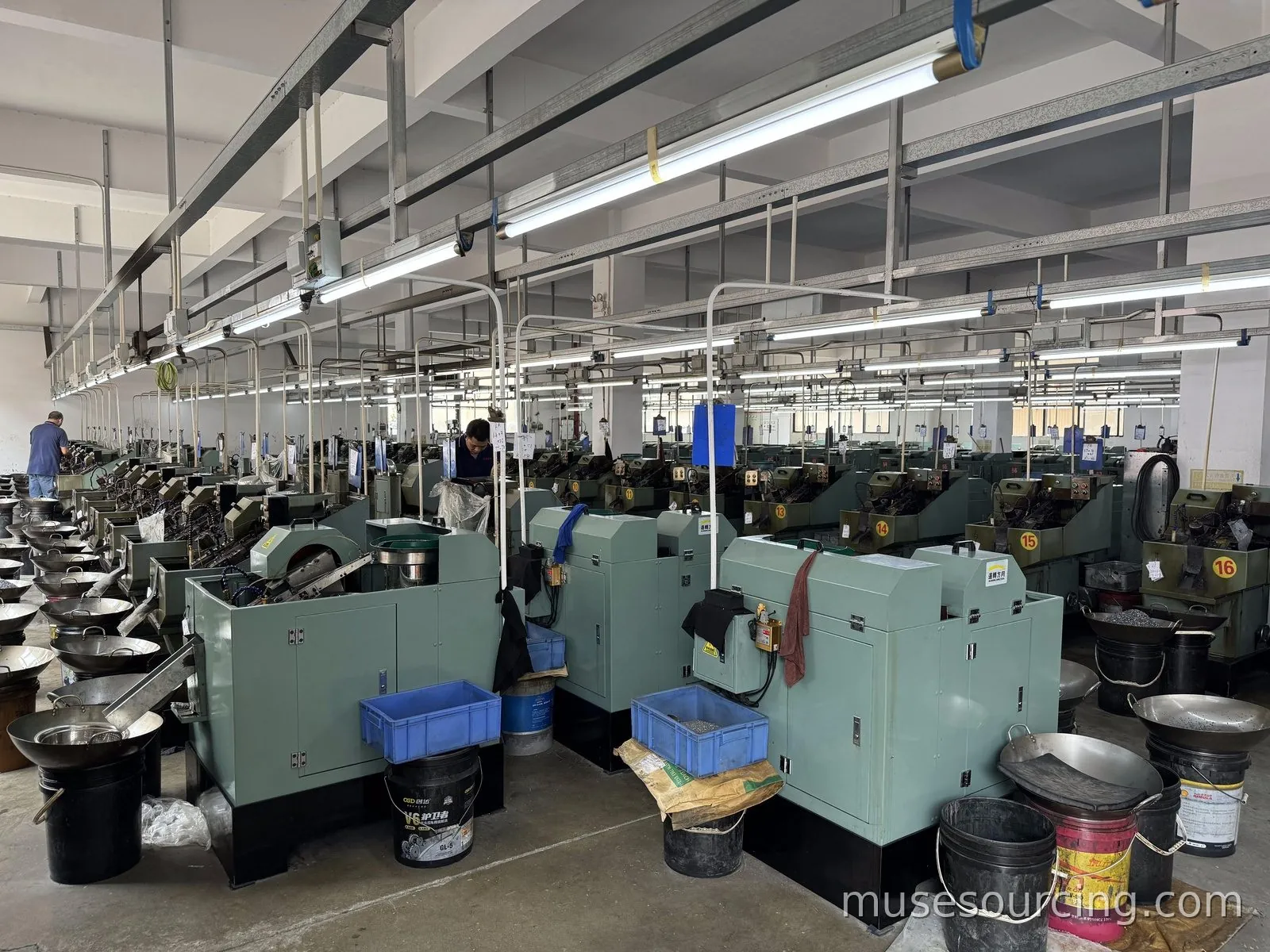
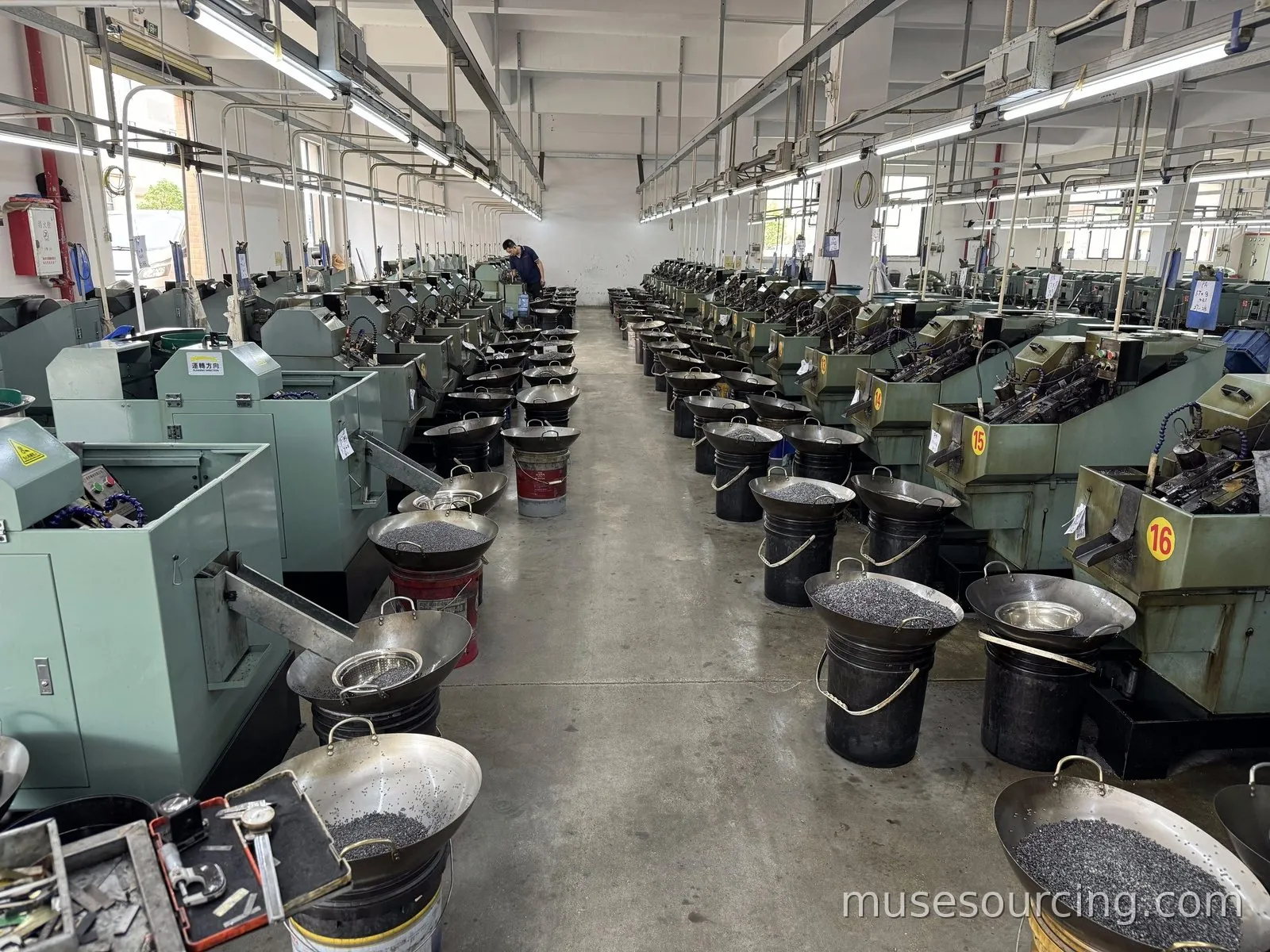
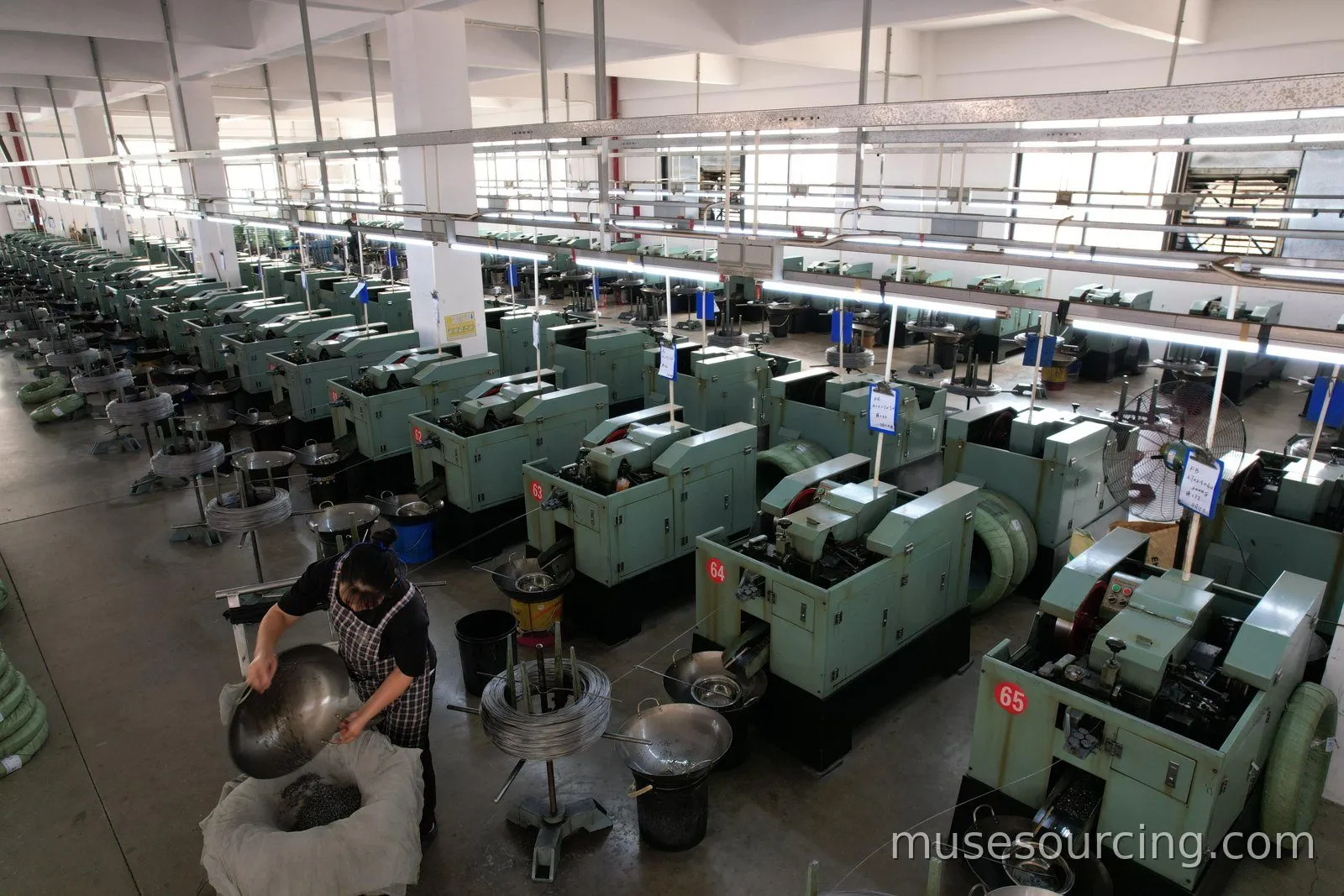
Real Factory Photos: Machining Floors and Showrooms in Guangdong
Real partner-factory photos — not AI-generated or stock imagery.
- Automatic lathe lines: rows of lathes machining tool parts in-house — proof that the machining stage sits on this factory’s own floor.
- Machining aisles and parts buckets: work in progress across the floor, which shows a factory producing at volume.
- Sorting freshly machined parts: the stage where dimensional rejects are pulled before hardening and finishing.
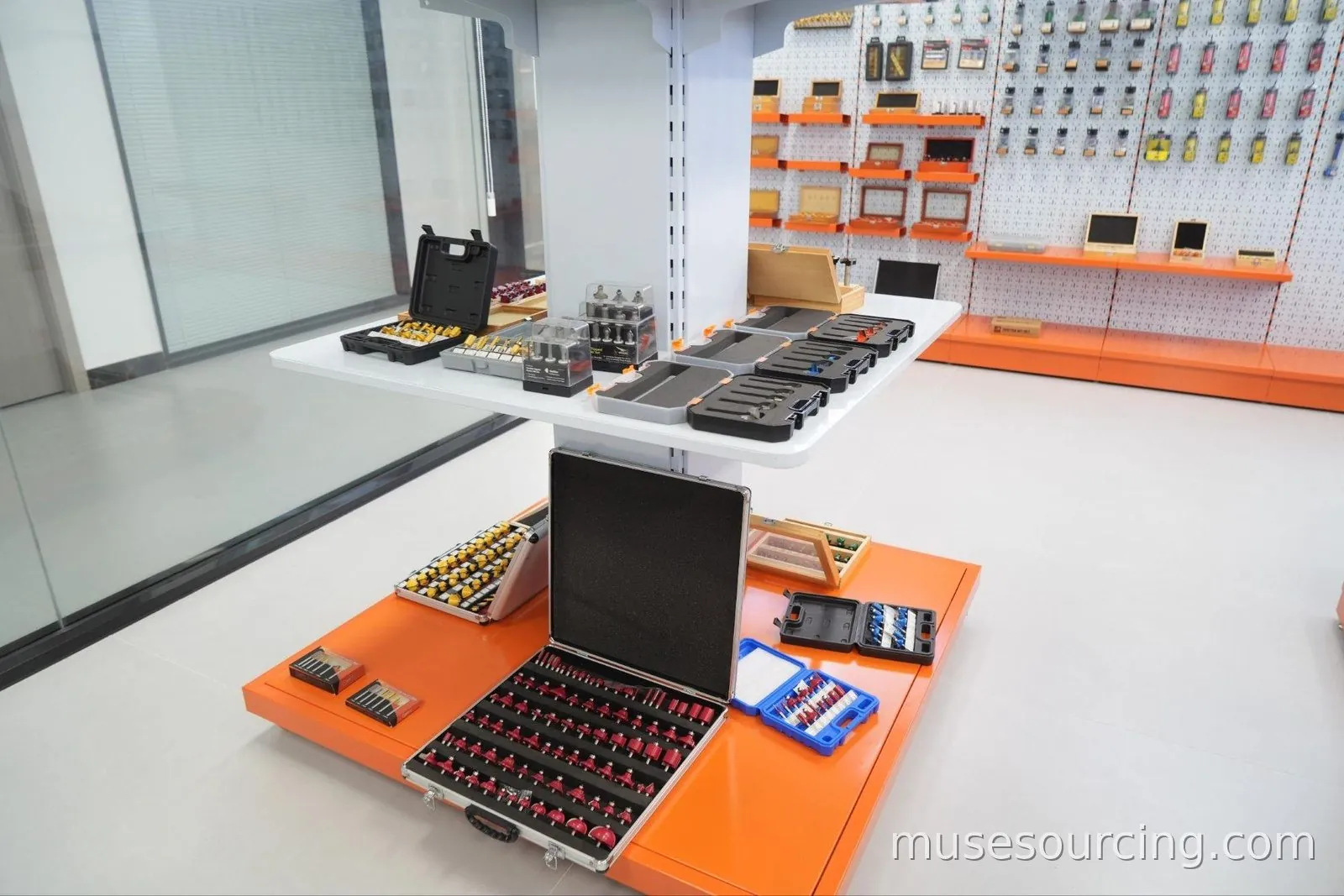
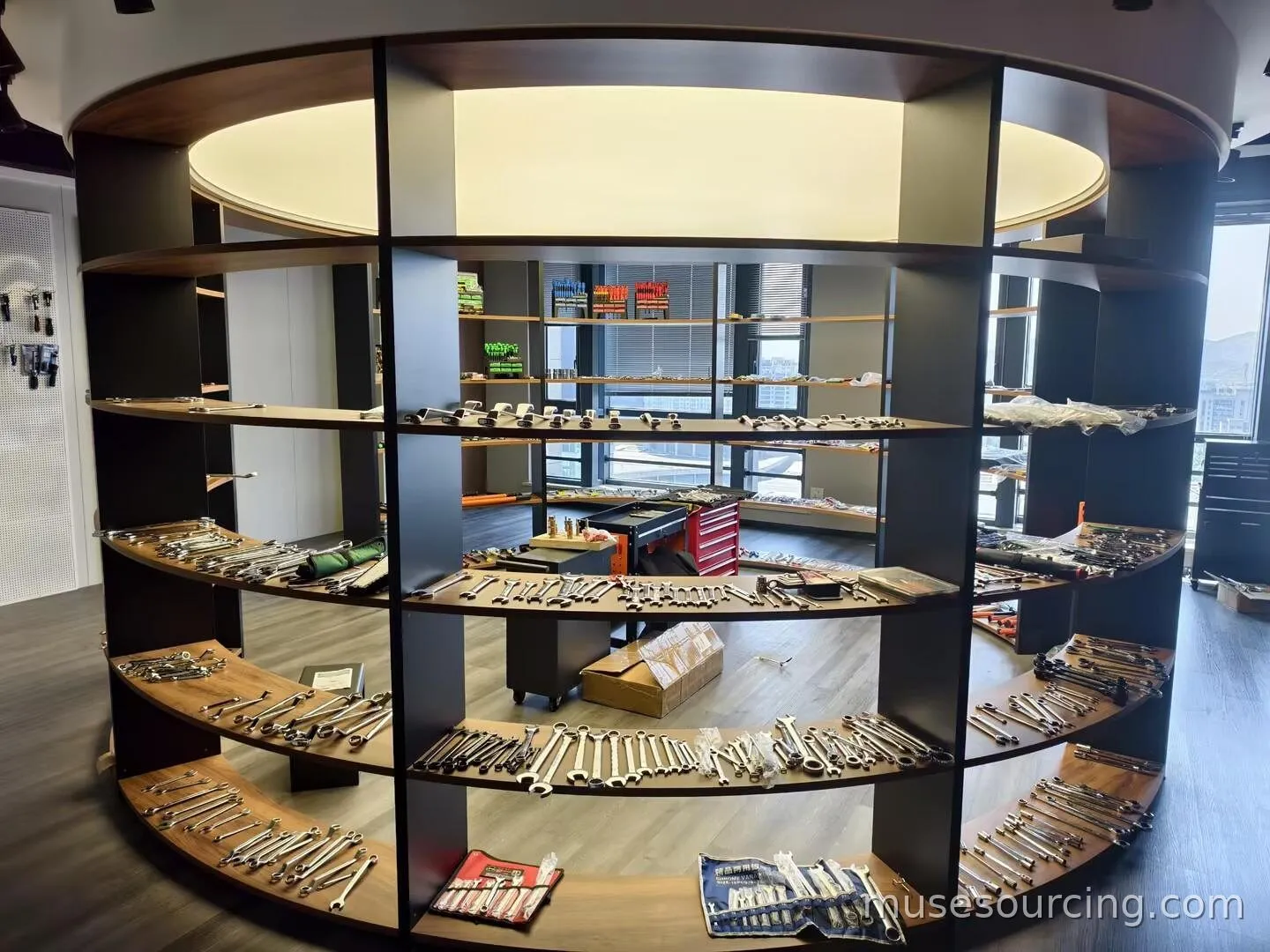
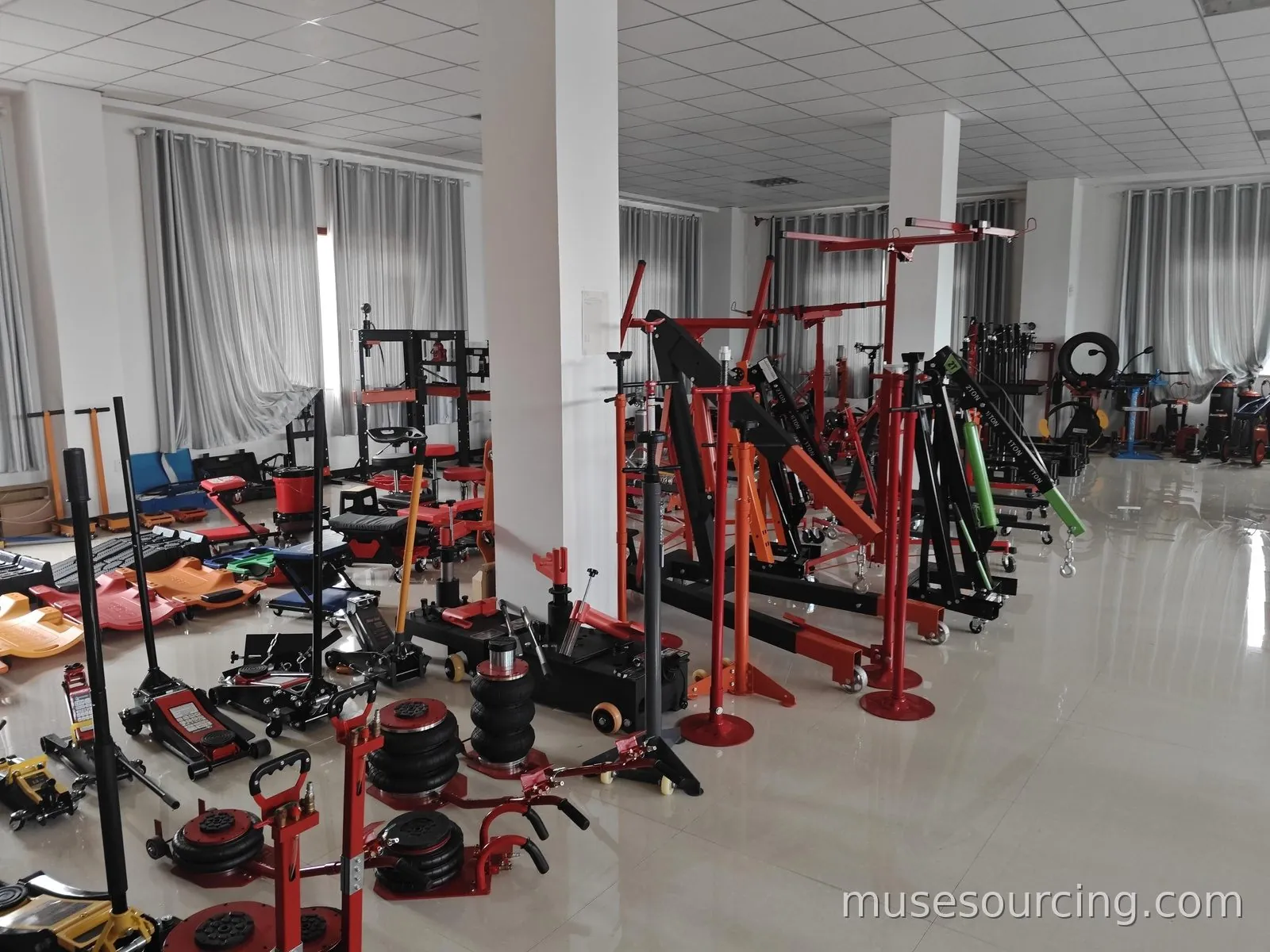
- Showroom ranges: tool sets, wrenches and lifting equipment on display — the range conversation starts here; the verification happens on the floor above.
Find and Verify the Right Hand Tool Factory
Our partner factories in this category are in Jiangmen, where the steel, machining and finishing trades these tools draw on sit inside one Guangdong hardware cluster. We check the manufacturer’s licence and business scope first, then walk the floor to confirm the machining lines — and, where the tools are forged, the presses, trimming and broaching stations — belong to the company making the offer. Some of our partner factories forge in-house, and where they do, the forging is verified on their own floor. Forging and heat treatment are also the two stages most often outsourced in this category; where a factory sends either stage outside, we name the outside performer in the supplier report and the verification follows the work there, because hardness consistency depends on it. Every comparison runs across 3–5 checked suppliers, and the supplier’s identity is available to you on request.
Quality Control & Inspection: What We Check Before Shipment
Every check below runs on samples pulled from the production run itself and sampled across the batch on an AQL basis — this is the quality control and inspection layer we add on top of the factory’s own QC, tested against the specification you approved rather than the factory’s house standard.
- Steel grade: material certificates checked against the claimed grade (chrome vanadium, carbon steel, stainless) before production, not after. Certificates are paper, so the hardness sampling below doubles as the physical cross-check: steel that behaves outside its grade’s range shows up there first. Where you want the composition itself proven rather than inferred, we can arrange a direct check: a spectrometer (PMI) reading at the factory, or a sample sent to a third-party laboratory for analysis. These are testing services available on the market that we arrange on your behalf — we do not run a laboratory of our own.
- Hardness: Rockwell hardness sampled on finished tools from the run and recorded by test position — jaw, drive square, shaft — against the range written into the order specification (wrenches and sockets are commonly specified in the 40s HRC). This is the figure that decides whether a wrench rounds off or a socket splits.
- Torque and ratchets: wrenches and sockets torque-tested by drive size (1/4″, 3/8″, 1/2″) against the agreed specification, in line with DIN/ISO/ASME grades as applicable; ratchets worked for gear and pawl engagement, reversal under load and backlash.
- Jacks and lifting equipment: load-tested to rated capacity and held under load, and checked for leak-down, safety-valve function, hydraulic seal weep and weld soundness on stands and hoists — against EN 1494 / ASME PALD-type requirements where the destination market applies them.
- Dimensions, plating and finish: gauging on sampled parts; plating thickness measured with a coating gauge, adhesion checked for peeling and blistering, and corrosion resistance checked against the salt-spray requirement in the agreed specification; surfaces checked for rust spots and sharp edges.
- Sets and packing: every set counted piece by piece against its layout, case and insert fit checked, retail packaging inspected before cartons close.
Shipping Hand Tools from Guangdong, China
Tools are dense freight: weight, not volume, fills the container, and mixed tool orders are consolidated by weight across cartons. We confirm carton weights and dimensions during inspection, check that finished tools carry anti-rust protection — oiled or VCI-wrapped, with desiccant in the cartons — before cartons close, because steel tools corrode inside a container long before they would wear out in use. Orders are then consolidated at our Shenzhen warehouse and FCL or LCL shipment coordinated accordingly. The loaded-carton photos you approve become part of the shipment record.
Frequently asked questions
How do you know a hand tool supplier is a real factory and not a trader?
We go and look. A hand tool factory has forging presses or machining lines, hardening and finishing capacity and parts moving through the floor; a trader has a showroom and a catalogue. Our supplier verification checks the company’s registration and business scope alongside the floor, and the result reaches you as a written supplier report before you commit to samples. MuseSourcing is the sourcing agent, not the factory — you contract with, and pay, the factory directly.
How is the steel grade and hardness of the tools guaranteed?
Nothing in sourcing is guaranteed; it is controlled at two points. Before production, the material certificates are matched to the grade you ordered. Before shipment, hardness is sampled on finished tools taken from the run itself, against the range written into your order specification — pieces outside that range are held back, reported to you with photos, and do not ship. The hardness sampling doubles as the physical cross-check that the delivered steel behaves like the grade on the certificate.
Can I put my own brand on the tools and cases?
Yes. Laser etching, stamped logos, handle colours and private-label retail packaging are standard work for these factories. Marking and artwork are approved on a production sample before the run — never from a screen image.
What is the usual minimum order for tool sets?
Standard sets in standard colours can start from around 100 units as a trial order, subject to inquiry, with the unit price stepping down as quantity rises. Fully custom set compositions and case moulds set their own minimums — send us the range you need, and the inquiry returns the exact figure for your specification.
Do you inspect tools before they ship?
Yes. The inspection runs on finished tools before the cartons close, sampled across the whole batch: hardness and torque sampling, plating and finish checks, and a piece-by-piece count of every sampled set. Anything outside the agreed specification is held back and reported to you with photos before the goods are released.
Sourcing hand tools?
Send the tool types, set composition and quantity you need. An initial inquiry (flat US$200) returns 3–5 checked suppliers with real figures for your specification.