
MuseSourcing sources kitchen knives — block sets, chef’s knives, Chinese cleavers, kitchen scissors — from partner factories in Yangjiang, Guangdong: China’s cutlery capital, the city that makes a large share of the world’s kitchen cutlery. A knife is a product whose quality cannot be photographed: two blades that look identical in a listing can be different steels, different hardness, different grinds. So in this category our work starts with documents and ends with samples, and the showroom is only where the conversation begins. From there, we compare samples, follow production, inspect the finished sets and coordinate shipment from Yangjiang.
Manufacturing hub: Yangjiang, Guangdong — China’s cutlery capital. The partner factories we use here grind, finish and pack in-house, and every steel claim is checked against mill certificates before sampling.
See all the clusters we work in: Products We Source
Key takeaways
- The steel grade is the product. A claimed 5Cr15MoV or VG-10 that arrives as a cheaper steel is invisible until the knife dulls — we check mill certificates against the order and spot-check hardness on samples.
- Grinding is where Yangjiang factories separate. Rows of individual grinding stations, each finishing blades by hand and eye, produce the edge consistency a fast line cannot.
- Knife sets fail commercially on the weakest piece, not the chef’s knife. Our sampling covers every piece in the set, including the scissors and the block.
What we source in this category
- Knife block sets and retail gift sets for wholesale and private-label programmes, branded packaging included
- Chef’s knives, santoku, cleavers and utility knives in mainstream stainless grades
- Kitchen scissors and cutting-tool combinations
- Custom handle materials and colours, laser-etched logos, retail boxes prepared at the factory to our written specification
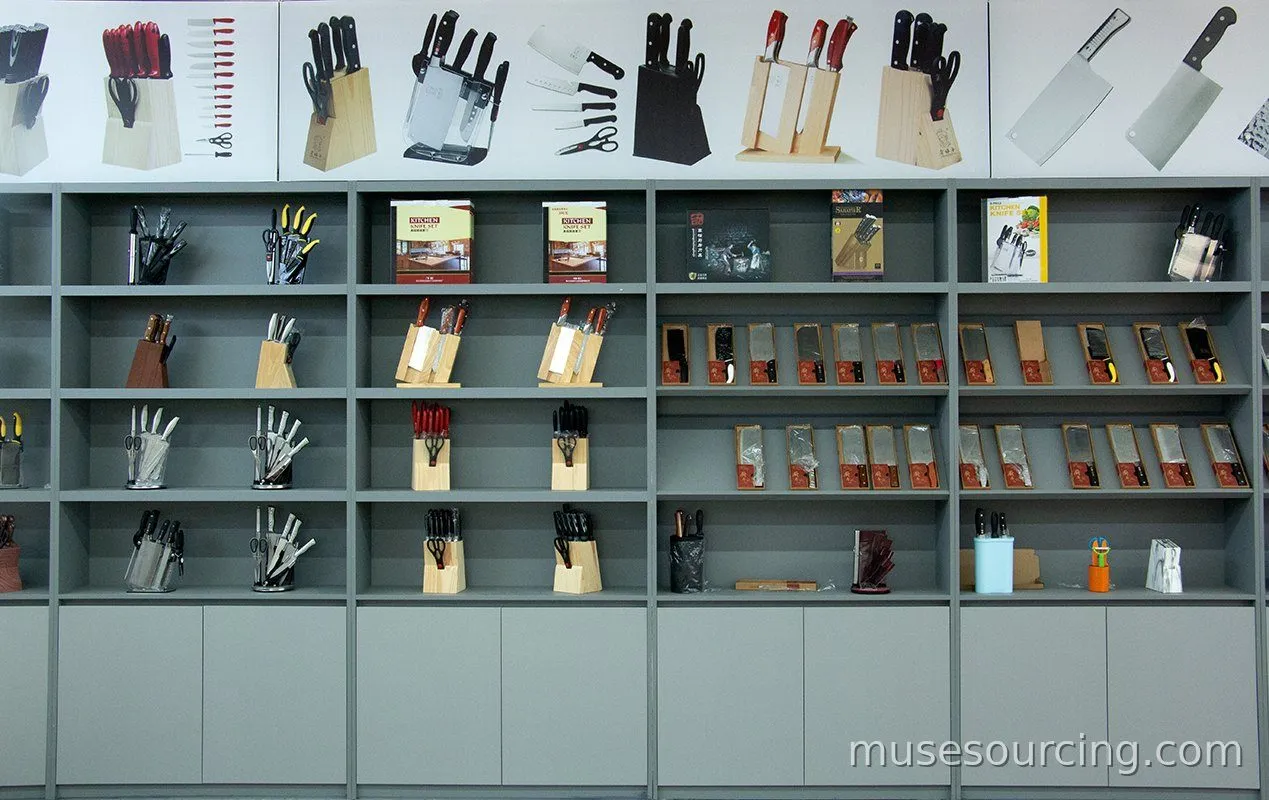
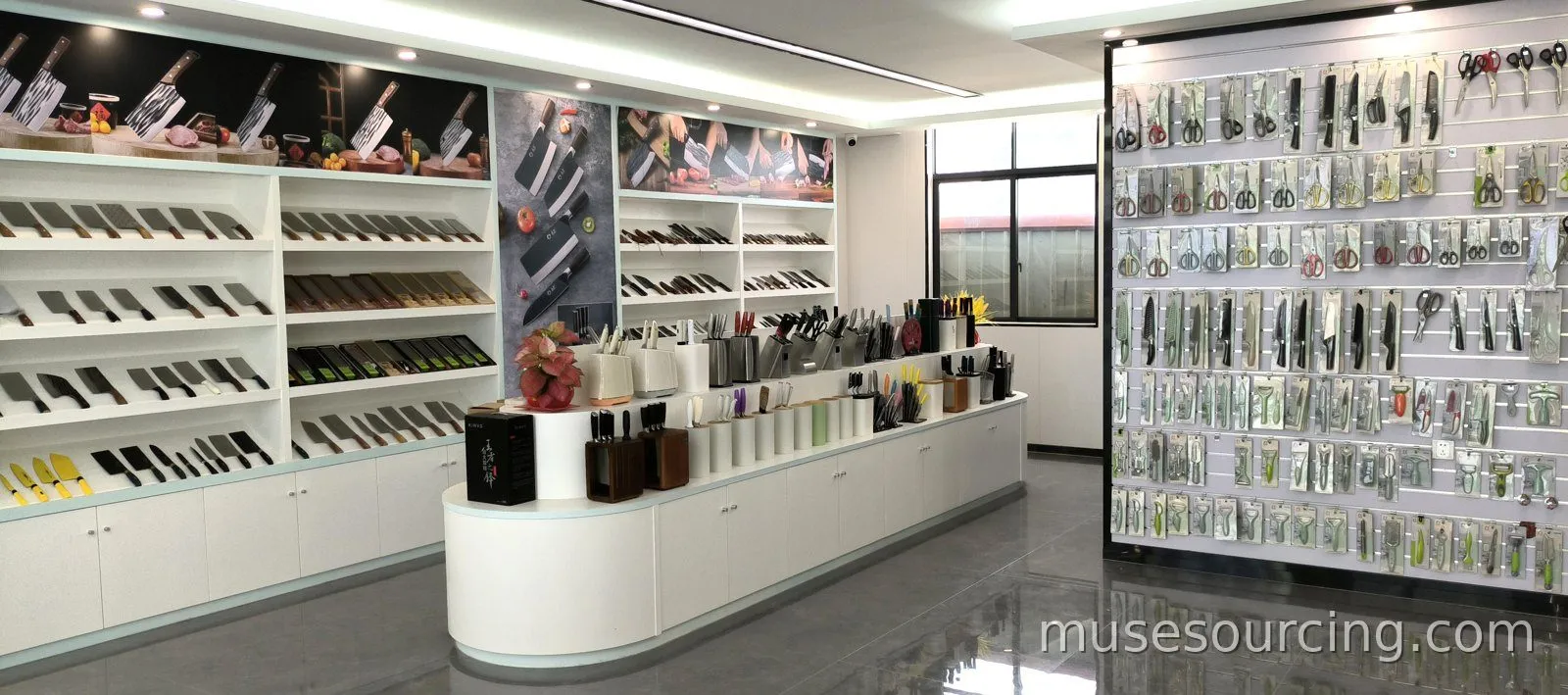
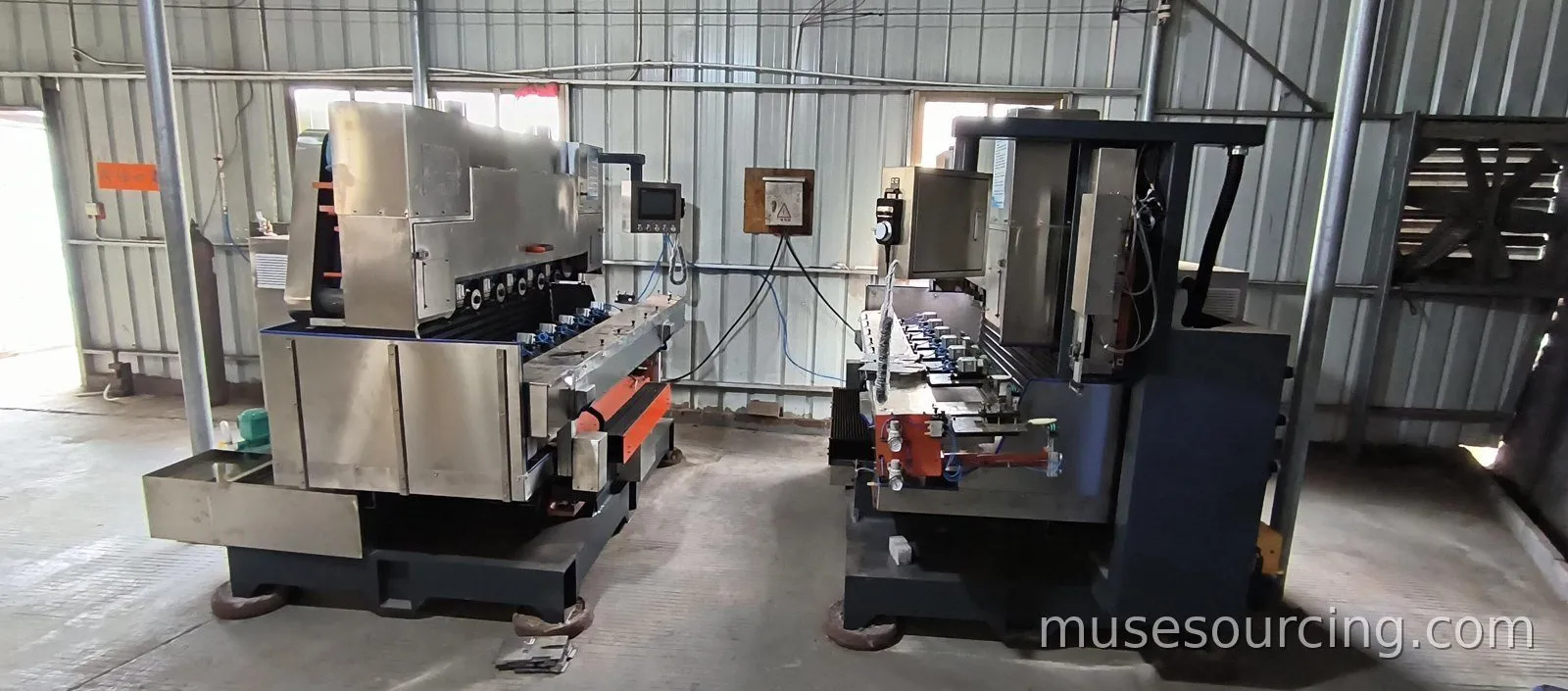
Real Factory Photos: Beyond the Yangjiang Showroom
Real partner-factory photos — not AI-generated or stock imagery.
- Knife-making machinery: proof that shaping happens in-house.
- Grinding workstations: where edge consistency is made, blade by blade.
- Packing line: every set assembled piece by piece — including the weakest piece, not just the chef’s knife.
- Showroom walls: useful for seeing the range; never treated as verification.



Find and Verify the Right Knife Factory
We check the licence and business scope before the floor walk. Then we separate what the factory controls itself — forging, heat treatment, grinding and packing — from what it quietly outsources. A factory that controls those stages can hold steel grade, hardness and edge quality across reorders; a showroom front cannot.
Quality Control & Inspection: What We Check Before Shipment
- Steel documents: mill certificates matched to the grade named in the quotation, before sampling fees are spent.
- Hardness: spot checks on sampled blades against the agreed HRC range.
- Grind and edge: consistency across a sample set — every piece, not only the hero knife.
- Handles and assembly: fit, riveting, balance in hand, and finish at the bolster.
- Packing line: set completeness, blade protection, retail box condition before cartons close.
Shipping Kitchen Knives from Yangjiang, China
Knives move as ordinary sea cargo when they are declared and packed correctly, and bulk orders from Yangjiang normally travel by sea. Air couriers apply their own rules to bladed goods, so samples are packed and declared with those rules in mind rather than risking refusal at a depot. Blade-tip protection is checked before cartons close.
Frequently asked questions
Can you verify the steel grade a factory claims?
Yes — that is the core of our work in this category. We check the factory’s steel certificates, and where a grade claim decides the price, we recommend laboratory confirmation on samples before a bulk order. If a factory cannot document its steel, we treat every other claim it makes accordingly.
Why does everyone source knives from Yangjiang?
Because the cluster is complete: steel supply, forging, grinding, handle making and packing sit within the same districts, so a Yangjiang cutlery factory can hold price and quality at the same time. It is also why verification matters — hundreds of factories share the same postcode and very different standards.
Are Yangjiang knives only low-end products?
No. The cluster covers everything from promotional sets to export-grade knives for established overseas brands. The buyer’s job — and ours — is matching the order to the tier of factory that actually produces at that level, which is what factory verification is for.
What is the minimum order for a knife set?
Standard sets can start from around 100 units as a trial order, with price stepping by quantity. Fully custom handle and packaging combinations set their own minimums, confirmed in the inquiry figures.
Can I brand the blades and the box?
Yes. Laser-etched blade logos, branded blocks and full retail packaging are standard, prepared at the factory to our specification and photographed for your confirmation before shipment.
Sourcing knives?
Send the set composition, steel grade and quantity. An initial inquiry (flat US$200) returns 3–5 checked Yangjiang suppliers, with the steel-document position for each.