
A Real China Sourcing Case Study on Turning a Packaging Mistake into a Better Customer Outcome
This article exists because many sourcing guides tell you how to avoid mistakes.
Very few explain what to do after a mistake has already happened.
This article is based on a real sourcing project in China. Some customer details have been anonymized for confidentiality.
Quick Summary
In this article, you'll learn:
What to do when your supplier manufactures the wrong packaging.
Whether remanufacturing is always the best solution.
How transparent communication can preserve customer trust.
Why understanding your customer's brand is often more important than simply fixing a mistake.
A real procurement story that ended far better than we expected.
The Story
Many years ago, shortly after I started working in procurement, a Spanish customer placed an order for a batch of household products from a factory in Jiangsu, China.
The order itself wasn't complicated.
The products were ready.
The shipment was approaching.
Everything seemed to be on schedule.
Until someone noticed the boxes.
According to the purchase order, every product should have been packed in custom color boxes carrying the customer's own branding.
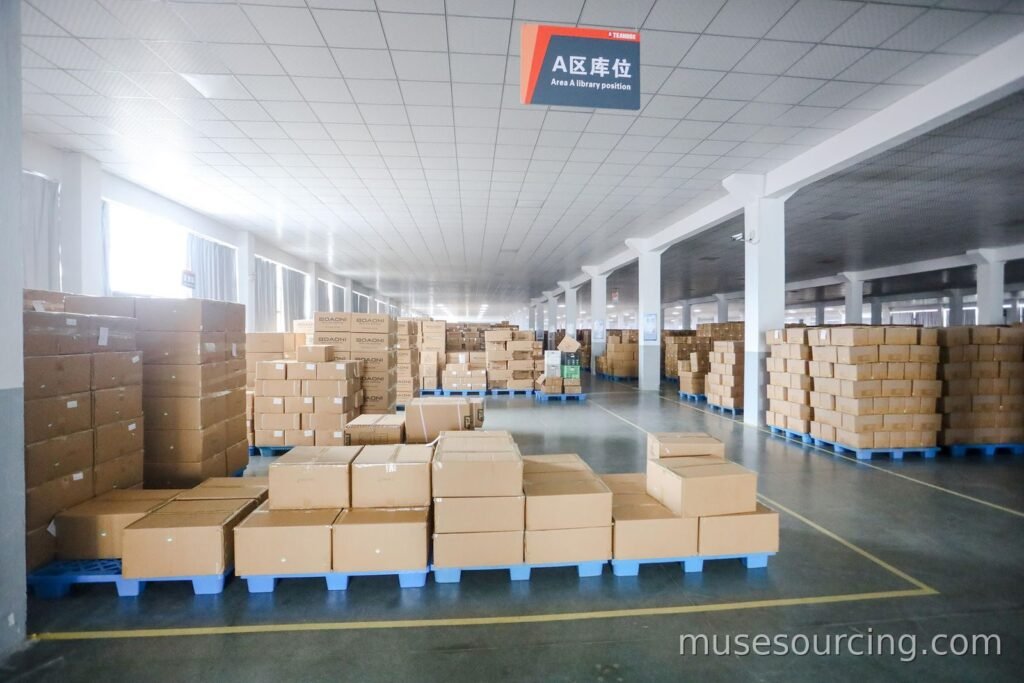
Instead, due to a communication mistake, the factory had packed the entire order into their standard yellow kraft paper boxes.
Every single carton had already been completed.
At that moment, we had two obvious choices.
The first was to remake all the packaging.
That would probably delay shipment by at least two weeks, require additional printing costs, and potentially affect the customer's product launch.
The second was to ship the products as they were.
Neither option felt right.
Finding someone to blame wasn't going to solve the problem.
So instead of asking,
"Who made the mistake?"
we started asking,
"Is there another way to look at this?"
Looking Beyond the Packaging
After discussing different possibilities with the factory, we stopped thinking about the box as a mistake.
Instead, we asked ourselves:
What if the packaging could tell a different story?
A yellow kraft paper box naturally uses far less printing than a traditional full-color retail box.
Perhaps that wasn't only a limitation.
Perhaps it could become part of the product itself.
Eventually, one sentence appeared on a piece of paper.
For environmental protection, we saved 96% of ink.
Then another discussion began.
Why 96%?
Why not 97%?
Or even 98%?
Someone laughed.
"98% sounds a little too much."
"What about 97%?"
Still not quite right.
Finally, the customer smiled.
"96%. It sounds more believable."
Everyone laughed.
The number wasn't based on laboratory testing.
It was simply the most credible way to express the idea.
A traditional retail box would normally be covered with logos, graphics, product descriptions and colors.
Now almost the entire surface remained unprinted except for one short sentence.
The exact percentage wasn't really the point.
Credibility was.
What Happened Next
To be honest, we had prepared ourselves for an angry customer.
Instead, something unexpected happened.
The customer didn't get angry.
After listening to our explanation and the proposed solution, they actually liked the idea.
They felt the minimalist kraft paper packaging better reflected the environmental values they wanted their brand to communicate.
What had started as a packaging mistake quietly became part of the product story.
When the products eventually reached the market, the customer later told us that the market response had been very positive.
Whether the packaging alone made the difference, nobody can say.
But one thing became very clear.
Honest communication had preserved trust.
The Conversation That Stayed With Me
Years later, I shared this story with several friends in international trade.
One of them immediately asked,
"Would this still work if the customer wasn't European?"
Another asked,
"What if the customer was from Latin America or Southeast Asia?"
I smiled.
"Don't copy the sentence."
That's never the lesson.
The sentence worked because it matched that customer's brand, that market, and that situation.
If everything changed, the solution should change too.
We even joked that if the customer had been a North American lifestyle brand, perhaps we would have printed something completely different.
Guess what's inside.
Turning the unexpected packaging into part of the unboxing experience.
Of course, we were joking.
But behind the joke was something serious.
Good procurement isn't about memorizing solutions.
It's about understanding your customer well enough to create the right solution for that particular situation.
What This Experience Taught Me
People often think procurement is mainly about finding factories, negotiating prices, following up production and inspecting quality.
Those things matter.
But they're only part of the job.
The longer I work in sourcing, the more I believe something else.
Procurement isn't just about placing orders, chasing suppliers or inspecting products.
Sometimes, it's about bringing factories and customers together to turn a situation that seemed destined to fail into an outcome everyone can accept.
Or sometimes…
into something even better.
Practical Lessons for Buyers and Procurement Professionals
If your supplier makes a packaging mistake, don't rush into a decision.
Instead, ask yourself:
Does the mistake affect product safety?
Does it violate any legal or regulatory requirements?
Will it damage the customer's brand?
What is the cost of delaying shipment?
Is there another acceptable solution?
Sometimes the answer will be simple:
Remake everything.
Sometimes it won't.
Every sourcing project deserves its own evaluation.
Frequently Asked Questions
Should I always remake incorrect packaging?
No.
The right decision depends on product safety, legal compliance, customer expectations, delivery deadlines and commercial impact.
Is it better to hide supplier mistakes?
No.
In my experience, transparency almost always creates more trust than trying to hide a problem.
Customers usually understand mistakes.
They rarely appreciate surprises.
Would this solution work for every customer?
Absolutely not.
The environmental message worked because it aligned with this particular customer's brand values.
The lesson isn't to copy the wording.
The lesson is to understand the customer.
Can procurement professionals create value beyond purchasing?
Definitely.
Anyone can place an order.
Real value often appears when unexpected problems need practical solutions.
Final Thoughts
This happened many years ago.
I have worked on countless sourcing projects since then.
But somehow, I still remember those yellow kraft paper boxes.
Not because of the packaging.
But because that project quietly changed the way I think about procurement.
Mistakes are inevitable.
Trust isn't.
Trust is built by how we respond when mistakes happen.
A Thought I Still Believe Today
Don't defend the mistake.
Reframe the story.
Not every mistake can be reframed.
Quality issues, safety risks and anything that could mislead consumers should never be hidden or justified.
But when a problem has more than one possible solution, honesty, creativity and collaboration can sometimes transform a difficult situation into an unexpected opportunity.
Because in the end,
Anyone can source products.
Not everyone can navigate uncertainty.
About the Author
I have spent more than 12 years working with Chinese manufacturers and international buyers, helping overseas companies source products, solve supplier problems and navigate the realities of global supply chains.
Through China Supply Chain Field Notes, I share real sourcing stories—not because every experience offers a perfect solution, but because real decisions are often made in imperfect situations.
If these stories help someone make one better decision in the future, they are worth sharing.
Related Reading
- Why Do Premium Products Feel Heavier? — how small product details change what customers are willing to pay.
- Why Experienced Buyers Influence Supplier Behaviour Before Problems Happen — shaping supplier behaviour before mistakes happen.
Planning a Similar Project?
Every product and supply chain is different. If you are sourcing from China and want an honest assessment of your project — what is realistic, what it should cost, and what could go wrong — send me the details through the form below. I personally read and reply to every inquiry.
Caroline Kong · MuseSourcing · Shenzhen, China